
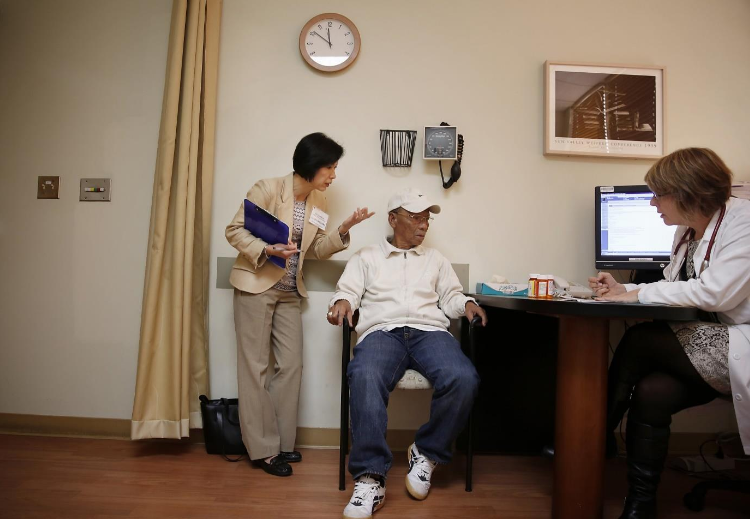
In any medical setting, the presence of an interpreter can help overcome the language barrier and prevent misdiagnosis, ensure compliance with treatment, reduce the likelihood of a serious adverse effect and, in general, improve the feeling of satisfaction among patients and practitioners.
In countries like Australia, UK or Japan, medical interpreters have become an integral element of the medical ecosystem and it has made the profession a regulated sector of the economy.
Malaysia’s landscape is quite different; besides the multilingual nature of the society, medical tourism has become a trend and the life science industry caters now to a growing number of foreigners and expats in need of medical services.
Medical tourism falls under the category of Community Interpreting, similar to immigration, police or court interpreting; it is therefore as a basic right but the logistics make such assumption to be wrong.
We can establish a comparison between ad-hoc, non professional interpreters and professional ones.
| NON-PROFESSIONAL | PROFESSIONAL |
|---|---|
| Minors should not be used as interpreters because their limited understanding of issues affecting adults | Fewer mistakes in communications |
| Some family members may have their own agenda | Better patient satisfaction |
| Interpreter may provide unsolicited advice | Interpreter as a cultural broker assist doctors in clarifying matters |
No guarantee of confidentiality | Interpreter can clarify meaning beyond language |
| Non-professional interpreters are associated with a higher risk or readmission | Lower risk of adverse effects or malpractice |
| Doctor may lost control of the interview because of tangential conversations Unfamiliarity with medical terms may lead to errors and misunderstandings | The use of trained interpreters reduces the risks of longer stays at hospital and the rates of readmission |
But for Malaysia, the need for medical interpreters is all the more acute due to the multilingual nature of the social fabric for several reasons:
People with limited English proficiency ( LEPs) would sometimes take serious leaps of faith for the sake of expediency in getting treated that precludes waiting for an interpreter to arrive.
Others would affect good command of the language, be it Malay or English, due to embarrassment.
Some patients may choose to go to traditional healers instead of physicians because their language is much easier to understand, the knowledge more accessible to the patient.
What could be the solution: the simple integration of the physical, digital and biological spheres.
In other words, the creation of a database of medical interpreters linked to the healthcare industry via the IoT and the use of AI for some tasks, as it is very clear by now that the Digital Health Environment is pretty much linked to the availability of fast, reliable interpreters available on short notice.
Right now the landscape is quite diverse; only some elite private hospitals count with a short pool of interpreters and it is mostly for “vanity medical tourism”( enhancements, implants, etc ) . Others who cater to the expat community would retain their own medical interpreters (Japanese in some Penang hospitals, Vietnamese at IJN KL, for instance); the public health sector is quite understaffed in all sectors and medical interpreters are no exception.
And the metrics are significant; Penang alone received more than 500,000 medical tourists in 2025 alone, with a turnover of 1.1 billion MYR. ( https://thesun.my/news/malaysia-news/penang-leads-malaysias-medical-tourism-with-45-revenue-share/
However, if Malaysia wants to become a reference model in medical interpreting services to the countries of the Global South, counting with an advanced, reliable and inclusive Digital Health Environment is an essential requisite.
It is quite feasible and in fact, it has been in the cards since 2019 but as of today no significant steps have been taken to accomplish such a task. From our point of view, a lot of private initiatives are leaning in that direction but without a proper technical and legal infrastructure, the standardization and professionalization of medical interpreting in Malaysia will remain a pipedream for years to come and we would end up becoming a mish-mash of standards, prices and performances.
One convenient institutional tool for such ecosystem would be the creation of a vetting and accrediting institution or statutory body that trains, validates or sanctions medical interpreters, that can receive feedback from the public and can redress complaints by patients or physicians. It could be named, the “Medical Interpreters Guild of Malaysia” or something to that effect; important to choose a prestigious name to add to its clout. Being Malaysia one of the most advanced countries in ASEAN, I reckon many other neighbours would soon emulate us and lift the standard of medical services across the regional board.
In this regard, it is commendable the initiative launched by the Malaysian Translators Association ( MTA ) this year, under the leadership of Prof. Hasuria Che Omar and Dr. Mohamed Zain, to vet and accredit professionals in our field; the said program will commence in the last quarter of this year that we hope will enhance the status of the translation and interpreting professions.
If you want to know more about this initiative, please check our Google Mybusiness profile:
https://share.google/23EK2DyJaEehyuoLj