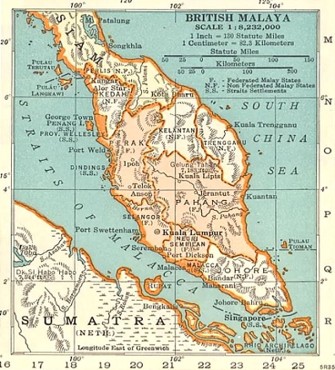
From Maritime Trade to Remote Interpreting: The Evolution of Interpreting Profession in Malaysia
Introduction
This study examines the historical development of interpreting in Malaysia from the pre-colonial period to the present day and considers the future trajectory of the profession within a rapidly changing linguistic and technological environment. The paper is divided into three principal sections: the historical foundations of interpreting in the Malay Peninsula and the wider Southeast Asian archipelago; the current structure and conditions of the profession in Malaysia; and the future prospects of interpreting in light of technological transformation, educational reform and regional economic integration.
The scope of this paper is only verbal interpreting and does not cover any modality of sign interpreting used in Malaysia, such as ISL ( International Sign Language ) or BIM ( Bahasa Malaysia Isyarat or Malay Sign Language)
The central argument advanced in this paper is that many of the defining characteristics of the contemporary Malaysian interpreting industry — including its multilingual demand structure, fragmented organization, uneven professional standards and non-existing regulatory framework — are not recent developments, but rather continuities of long-standing historical patterns. By situating the contemporary profession within this broader historical context, the study aims to provide language service providers and researchers with a deeper understanding of both current market dynamics and future strategic challenges.
The translation and interpreting industry in Malaysia is best understood as the product of a long historical process shaped by maritime trade, migration, colonial administration, religion and globalization. Language mediation did not emerge as an isolated modern profession; rather, it has been embedded in the social and economic fabric of the region for centuries as a practical instrument of exchange, diplomacy and governance. Malaysia’s position along the Strait of Malacca — one of the most strategically important maritime corridors in world history — placed the region at the intersection of major civilizations and generated sustained multilingual interaction long before the emergence of modern nation-states.
Malaysia presents a particularly distinctive environment for the study of interpreting because of its multilingual, multiethnic and multireligious composition. Bahasa Malaysia functions as the national language, while English continues to occupy an important role in commerce, higher education, diplomacy and law. Mandarin, Cantonese, Tamil and numerous indigenous languages are also widely used throughout the country. In principle, such linguistic diversity should provide favourable conditions for the development of a highly professionalized interpreting sector. In practice, however, the profession remains fragmented, unevenly regulated and highly dependent on freelance practitioners.
The history of interpreting in Malaysia cannot be separated from the broader history of trade, religion, migration and empire in Southeast Asia. Long before the emergence of formal interpreting institutions, linguistic intermediaries facilitated communication between merchants, diplomats, missionaries and administrators. Their work contributed not only to commercial exchange but also to the transmission of political authority, religious ideas and cultural knowledge. Despite their importance, interpreters themselves frequently remained invisible within the historical record.
This paper therefore seeks not only to describe the contemporary profession in Malaysia but also to situate interpreting within a broader historical continuum. In doing so, it examines both the institutional weaknesses currently affecting the sector and the structural transformations likely to shape its future development.
I. Historical Background of Interpreting in Malaysia
1. Maritime Southeast Asia and Early Interpreting Traditions
Long before the emergence of colonial administrations, the Malay Peninsula and the surrounding archipelago functioned as a maritime crossroads linking China, India, the Middle East and, later, Europe. Trade routes passing through the Straits of Malacca created sustained contact between populations speaking different languages and practising different religions. Under such conditions, interpreting was not an occasional activity but an essential mechanism of exchange and conflict resolution.
The Srivijaya Empire, centred in Sumatra between the seventh and thirteenth centuries, provides one of the earliest examples of a political system dependent upon multilingual communication. Srivijaya controlled important maritime passages and maintained relations with Chinese courts, Indian merchants and regional rulers. Although surviving records rarely identify interpreters by name, historians generally acknowledge that empires operating across extensive maritime trade networks necessarily relied on individuals capable of mediating between linguistic communities. It was a multilingual entreprise.
In these early periods, linguistic intermediaries performed functions extending well beyond commerce. They assisted in diplomacy, taxation, navigation and religious dissemination. The spread of Buddhism and Hinduism throughout maritime Southeast Asia was facilitated not only by monks and merchants but also by individuals able to explain religious concepts across linguistic boundaries. Such intermediaries contributed significantly to cultural transmission in a region where no single lingua franca dominated all communities.
The cosmopolitan character of early Malay ports also encouraged practical multilingualism. Malay gradually evolved into a regional trade language used by merchants from different parts of Asia. Nevertheless, the emergence of a lingua franca did not eliminate the need for interpreters. Commercial negotiations, legal disputes and religious instruction continued to require specialists capable of bridging differences in dialect, status and technical vocabulary.
The early development of interpreting in the region therefore emerged from practical necessity rather than institutional planning. Although interpreting had not yet become a formal profession, it already occupied a central role in the functioning of maritime Southeast Asia.
2. Islamisation and the Sultanate Period
The spread of Islam between the thirteenth and fifteenth centuries intensified the need for linguistic mediation. Muslim traders, scholars and missionaries arrived from Arabia, Persia and especially the Indian subcontinent. Communities of Gujaratis, Tamils, Bengalis and Punjabis settled in Malacca and other commercial centres.
The Malacca Sultanate became one of the most influential political and commercial entities in Southeast Asia during the fifteenth century. Its strategic location transformed the city into a meeting point for traders from East Asia, South Asia and the Middle East. From Malacca to Muscat and then onto the MENA Region and Europe; drawn by the trilogy of spices ( nutmeg, cinnamon and clove ), considered excellent food preserves for a continent that have been decimated by the plague, European nations soon became maritime powers and began so sail to the Malay Archipelago in search of the spices.
The administration of such a multicultural port required constant communication across languages. Court officials, harbour administrators and religious scholars relied upon interpreters to manage diplomatic and commercial interactions.
Historical records provide few names of interpreters from this period. Nevertheless, their presence can be inferred from the complexity of trade and governance in Malacca. Foreign envoys communicating with the Sultan would almost certainly have required linguistic intermediaries. Similarly, Islamic scholars introducing Arabic religious terminology into Malay-speaking communities depended heavily on translation and interpretation.
The Islamisation process itself illustrates the role of language mediation in cultural transformation. Religious concepts rooted in Arabic had to be explained within local cultural frameworks. Over time, Malay absorbed numerous Arabic terms related to theology, law and administration. Translators and interpreters thus acted as important cultural intermediaries facilitating linguistic and intellectual integration.
The Sultanate period also consolidated Malay as a regional language of diplomacy and trade. Yet the continued arrival of foreign merchants ensured that multilingual interaction remained constant. Interpreting, though still largely informal, became increasingly associated with governance, commerce and religion.
The European colonial period: a foreword
As we alluded to earlier, the quest for the spices was initially a matter of survival, given the food preservation properties of several spices; the Bubonic Plague, transmitted by rodents that had wrecked European societies and economies was the incentive for early explorations of Asia, Africa and the discovery of the Americas
Could one say that the end of the Medieval period and the dawn of the Modern Era, was due to the search for spices in remote islands?; If we read deep into History the first voyage of Columbus was ostensibly intended to reach China, Japan and then head south to the Malay Archipelago and the Spice Islands. The New World happen to be in between; the American continent was made known to the rest of the world and vice versa, completing the first wave of globalization.
It sounds very plausible: Rats infestation => need for spices => world exploration and colonization
3. Portuguese Malacca and Enrique de Malacca
The Portuguese conquest of Malacca in 1511 by Diego de Alburquerque marked a major turning point in the history of the region. The Portuguese attempted to monopolize trade routes and impose greater control over maritime commerce. As a result, Malacca began to lose its preeminence as entrepot for commerce and traders started to settle elsewhere in Penang, Batavia and Palembang.
This colonial project required interpreters capable of operating between European administrators and local populations. One of the most frequently discussed figures associated with interpreting during this period is Enrique de Malacca. Enrique was taken from the Malay world as a captive and later accompanied Ferdinand Magellan’s expedition of 1519. Some historians argue that Enrique may have been the first person to complete the circumnavigation of the globe, although the issue remains debated.
Enrique’s story illustrates the ambiguous position occupied by interpreters during colonial expansion. Linguistic intermediaries were indispensable to imperial ventures, yet they often existed within highly unequal power structures. Colonial authorities relied upon them for communication, intelligence gathering and negotiation, and the catholic church for missionary work, but interpreters themselves rarely received recognition equivalent to military or political leaders.
Portuguese colonial administration in Asia depended heavily on such intermediaries. Colonial officials interacted with Malay rulers, Arab merchants, Chinese traders and local communities speaking a wide range of languages. Effective multilingual communication became essential to treaty negotiations, commercial regulation and missionary activity.
The Portuguese period also introduced new layers of linguistic complexity into the region. Portuguese loanwords entered Malay, particularly in areas related to administration, trade and material culture, resulting in “Cristao” a sort of Portuguese creole spoken in Malacca and other former enclaves by those who mingled with the first Europeans. The circulation of people across colonial networks further expanded multilingual contact zones throughout Southeast Asia.
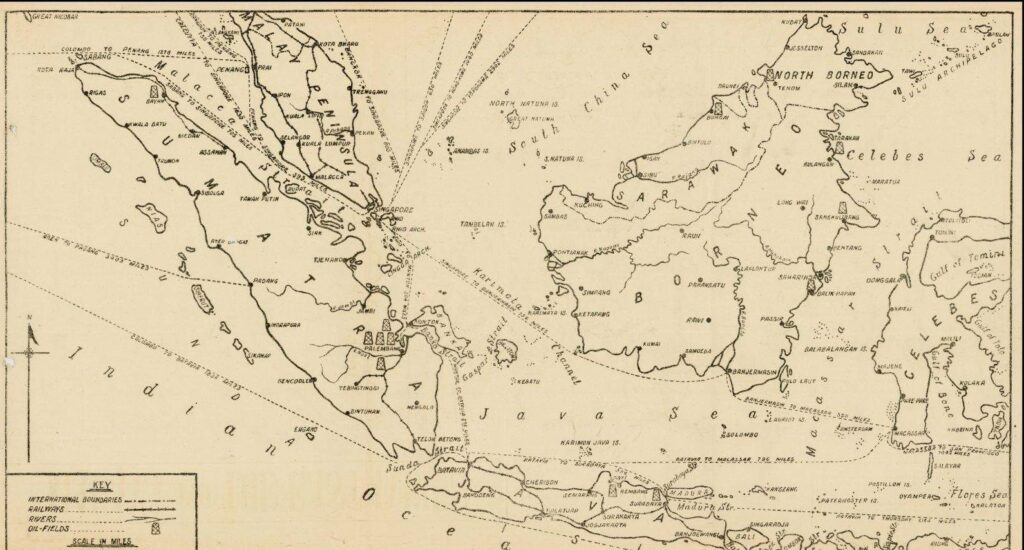
Plausible trip of Enrique de Malacca – He probably travelled most of the dotted line twice
4. Dutch Expansion and Orientalist Scholarship
The Dutch East India Company (VOC) gradually displaced Portuguese influence in many parts of maritime Southeast Asia. Following the capture of Malacca in 1641, Dutch authorities consolidated their political and commercial influence over important regional trade routes.
As with the Portuguese before them, Dutch administrators depended extensively on interpreters and translators. The VOC was not simply a commercial enterprise; it functioned simultaneously as a military, diplomatic and administrative institution. A sort of multi-track institution the Dutch seem so adept at setting.
Communication with local rulers and merchant communities was therefore indispensable to maintaining Dutch influence.
One of the most important intellectual figures of this period was Franciscus Valentijn. His extensive work, commonly referred to as Oud en Nieuw Oost-Indiën (“Old and New East Indies”), documented linguistic and cultural aspects of the region. Valentijn collected Malay and Javanese materials, including proverbs, oral traditions and glossaries, thereby contributing to early European knowledge of local languages.
Although Valentijn is remembered primarily as a scholar and orientalist, his work depended heavily on collaboration with local informants, interpreters and scribes. Colonial linguistic knowledge was rarely produced by Europeans alone. Indigenous intermediaries played a crucial role in explaining vocabulary, customs and texts.
The Dutch period therefore illustrates another dimension of interpreting history: the relationship between language mediation and knowledge production. Interpreters not only facilitated communication but also contributed to the recording and classification of local cultures.
5. British Colonial Rule and Munshi Abdullah
British influence in Malaya began in 1786 with the conquest of Penang by Francis Light and expanded significantly during the eighteen and nineteenth centuries. Colonial administration, missionary activity and commercial development increased the demand for interpreters and translators. English gradually became associated with governance, education and trade.
One of the most important literary and linguistic figures of this period was Abdullah bin Abdul Kadir, widely known as Munshi Abdullah. A contemporary of Stamford Raffles, Abdullah worked as a teacher, translator and interpreter. His autobiographical work, Hikayat Abdullah, remains an important source for understanding nineteenth-century Malaya.
Munshi Abdullah occupied a complex position between colonial authorities and local society. Although ethnically Tamil, he was culturally Malay and interacted extensively with British administrators and missionaries. His linguistic abilities enabled him to operate across different social and political spheres.
Scholars frequently regard Hikayat Abdullah as a transitional work in Malay literature because of its autobiographical and observational style. From the perspective of interpreting history, Abdullah also represents the emergence of more visible language professionals in colonial Southeast Asia.
During British rule, interpreting became more institutionalised within courts, administrative offices and trade centres. Nevertheless, the profession still lacked formal training structures. Most interpreters acquired their skills through multilingual upbringing, apprenticeship or practical experience.
6. The Japanese Occupation
The Japanese occupation of Malaya and Borneo between 1941 and 1945 created new linguistic and political realities. Communication between Japanese military authorities and local populations required interpreters at multiple levels of administration.
Some Japanese residents already living in Malaya before the war, (some accounts put the figure at 8,000 people) acted as informal interpreters, while locals with knowledge of Japanese or English were also recruited. Interpreters operating during this period frequently worked under difficult and politically sensitive conditions.
The occupation years highlight the vulnerability of interpreters during wartime. Linguistic intermediaries could easily be viewed with suspicion by different communities depending on their perceived loyalties. Across many occupied territories in Asia, interpreters occupied morally ambiguous and politically precarious positions.
Although Malaya did not have any pre-war military cooperation with Japan, unlike Burma or Thailand, Japanese authorities rapidly established local networks during the occupation. Language mediation remained indispensable to military administration, intelligence gathering and propaganda effort.
The Japanese period was relatively brief, but it reinforced the continuing importance of interpreters during moments of political transition and conflict.
7. Post-Independence Development: From Nation-Building to Global Industry
Following independence in 1957, translation assumed a central role in the project of nation-building. The adoption of Bahasa Melayu as the national language required the large-scale translation of legal, educational and administrative materials. Institutions such as Dewan Bahasa dan Pustaka (DBP), established in 1956, and its spinoff, the Malaysian Translators Association (MTA) were created to support language development, standardisation and translation activities at a national level.
During this period, translation was largely state-driven and closely connected to broader efforts to construct a cohesive national identity. Interpreting, by contrast, remained concentrated primarily within government and legal contexts and did not experience the same degree of professionalisation.
From the 1990s onward, Malaysia’s increasing integration into the global economy transformed translation and interpreting into a more recognisable commercial industry. Economic expansion, foreign investment and digitalisation generated new forms of demand, particularly in corporate communication, localisation and international business.
Malaysia also became increasingly visible in international diplomatic and regional forums, including ASEAN and the Non-Aligned Movement. Interpreting services expanded into healthcare, corporate and conference settings, while technological developments facilitated the growth of remote and hybrid interpreting.
Despite these developments, the industry continues to display a high degree of fragmentation, with a strong dependence on freelancers and small agencies rather than large multinational language-service providers. In many respects, this reflects the historical continuity of informal language mediation practices, even as the sector becomes more technologically sophisticated and globally integrated.
II. The Contemporary Interpreting Industry in Malaysia: an overview
Contemporary Malaysia presents a paradox for the interpreting profession. On the one hand, the country possesses remarkable linguistic diversity and extensive international connections. On the other hand, interpreting remains insufficiently regulated and unevenly professionalised.
Malaysia’s linguistic landscape includes Bahasa Malaysia, English, Mandarin, Cantonese, Tamil and numerous indigenous languages spoken in Sabah and Sarawak. In addition, international business and diplomacy create demand for interpreting involving Arabic, Japanese, Korean, French, Spanish and other languages. Despite this diversity, the number of professionally trained interpreters remains relatively limited.
The Malaysian interpreting market can broadly be divided into several sectors:
- conference interpreting
- legal and court interpreting
- medical interpreting
- community interpreting
- business interpreting
- media interpreting
Professional standards vary significantly between these sectors.
Conference interpreting represents one of the most specialised areas. International conferences organised in Kuala Lumpur and other urban centres periodically require simultaneous interpreters. Nevertheless, Malaysia still depends substantially on freelance practitioners rather than large institutional interpreting bodies.
Many conference interpreters have developed their expertise through professional experience rather than formal university training, some having invested on professional skilling and attended worshops, seminar and capacitation courses.
Court interpreting remains essential in a multilingual legal environment. Defendants, witnesses and migrants frequently require interpretation in criminal and civil proceedings. However, interpreting standards differ considerably across jurisdictions. In some cases, interpreters lack specialised legal training, raising concerns regarding accuracy and procedural fairness.
Medical interpreting has become increasingly important because of Malaysia’s role as a regional medical tourism destination and because of substantial migrant labour flows. Communication barriers in healthcare settings can directly affect diagnosis, informed consent and treatment outcomes. Yet medical interpreting services remain inconsistent, particularly outside major urban hospitals. There is also medical tourism of many kinds, from lifecare treatment to vanity surgery. Those segments also require medical interpreting at hand and many medical centres already have in-house interpreters for that reason.
Community interpreting has expanded alongside migration patterns. Malaysia hosts large numbers of migrant workers and refugees from Indonesia, Bangladesh, Myanmar, Nepal and other countries. Communication between these communities and public institutions often depends on ad hoc interpreters, volunteers or bilingual community members rather than formally trained professionals. But that is far from an ideal situation, given that an added layer of sensitivity and finesse to engage with vulnerable people who had suffered hardships or trauma is also required; yet very few interpreters in Malaysia have had any training at all on this delicate field; the only workshop one can mention are the online seminars for interpreters dealing with victim of TiP ( traficcking in persons ) jointly organized by a CSO based in Malaysia-that we can’t name due to NDA restrictions- and B Lingo Communications Sdn Bhd in 2021 and 2022 were only a handful of Burmese, Arakanese, Bengali, Somali and Arabic interpreters, numbering no more than twenty, were present.
English continues to occupy an influential position in commerce and higher education. Consequently, Bahasa Malaysia-English interpreting remains one of the most common language combinations. Mandarin-English and Mandarin-Bahasa Malaysia combinations are also increasingly requested within business environments.
The rise of China as a major economic partner has significantly increased demand for Mandarin interpreters, particularly since the launch of the Belt and Road Initiative. Large infrastructure projects and commercial negotiations frequently require professionals capable not only of linguistic mediation but also of navigating technical and cultural complexities.
Another defining characteristic of the Malaysian interpreting sector is the dominance of freelancing. Many interpreters operate independently without long-term institutional affiliation. Although freelancing offers flexibility, it also creates challenges related to income stability, professional accreditation and quality assurance.
Professional associations exist but possess limited regulatory authority. One such organization is the Persatuan Penterjemah Malaysia, which operates in association with Dewan Bahasa dan Pustaka. However, Malaysia lacks a comprehensive accreditation framework comparable to those found in countries such as Australia or the United States.
Similarly, institutions such as ITBM are sometimes perceived by the public as regulatory authorities, although they function primarily as government-linked commercial entities or GLC’s rather than state or independent professional accreditation bodies.
Unlike professions such as law or medicine, interpreting in Malaysia is not regulated through mandatory licensing structures. As a result, clients frequently struggle to distinguish between highly trained interpreters and individuals possessing only conversational bilingual ability.
This confusion between bilingualism and professional interpreting remains one of the sector’s principal problems. Professional interpreting requires rapid cognitive processing, subject-matter expertise, ethical awareness and advanced memory skills. Linguistic fluency alone does not guarantee professional competence. Sometimes the cognitive load can be overwhelming.
In the field of community interpreting, additional sensitivity is required when working with vulnerable individuals who may have experienced trauma, displacement or exploitation. Yet specialised training opportunities in these areas remain extremely limited.
Training opportunities in Malaysia remain uneven overall. Some universities offer translation and interpreting components within broader language programmes, but specialised conference-interpreting training remains comparatively limited when measured against institutions in Europe or parts of East Asia.
The main universities currently offering undergraduate or postgraduate programmes in translation and interpreting are Universiti Sains Malaysia (USM), Universiti Malaya (UM) and Universiti Kebangsaan Malaysia (UKM.
Technology has also transformed professional expectations exponentially. Remote interpreting platforms became increasingly common during and after the COVID-19 pandemic. Malaysian interpreters now regularly work through online systems connecting clients across borders. While this has expanded market access, it has also intensified international competition.
Machine translation and speech-recognition technologies are beginning to influence interpreting workflows. Although automated systems continue to improve rapidly, they remain limited in contexts requiring cultural sensitivity, legal precision or nuanced negotiation. Such systems also continue to perform inconsistently when confronted with accented speech, emotional distress or non-standard linguistic environments. For main languages, the path may be closer but for rare ones, the chance of having a bot replace the interpreter seem like a very far-fetched idea.
Rather than eliminating interpreters entirely, technological developments are more likely to redefine their role. Human interpreters remain essential in situations involving ambiguity, diplomacy, ethical judgment or emotionally sensitive communication.
Economic disparities within the profession are also evident. Conference interpreters working at international events may command relatively high fees, whereas community interpreters frequently receive comparatively low remuneration despite operating in highly sensitive environments. The absence of standardised remuneration structures contributes to instability within the profession.
Ethical concerns remain significant. Professional interpreters are generally expected to maintain confidentiality, impartiality and accuracy. Yet uneven training standards mean that ethical awareness varies substantially across the sector. In legal or medical settings, inadequate interpretation may produce serious consequences.
Another challenge concerns public visibility. Interpreting is still poorly understood by much of the broader public and is frequently perceived as an extension of general bilingualism rather than as a specialised technical discipline. This perception affects both remuneration and institutional recognition.
Nevertheless, several developments indicate gradual professional consolidation. International conferences hosted in Malaysia have increased exposure to professional simultaneous-interpreting standards. Younger interpreters also benefit from access to online training materials, international certification programmes and digital terminology resources.
Malaysia’s strategic position within ASEAN further reinforces the importance of multilingual communication. Regional diplomacy, trade agreements and educational exchanges continue to generate sustained demand for interpreting services.
The present condition of interpreting in Malaysia may therefore be characterised as one of growing demand combined with uneven institutional development. The profession possesses considerable potential but continues to face structural limitations related to regulation, training and public recognition.
III. The Future of Interpreting in Malaysia
1. Market Outlook 2025–2030
1.1 Global Context and Relevance to Malaysia
The global language-services industry is expected to continue expanding through 2030, driven by globalisation, digital transformation and the growing demand for multilingual communication across both public and private sectors. According to CSA Research, the global market for language services has demonstrated sustained growth over the past decade, barring 2020 due to the Covid pandemic that, paradoxically, helped normalize Remote Simultaneous Interpreting (RSI) for the general public.
Industry estimates place the value of the global language-services market at approximately USD 52 billion in 2024, although broader calculations incorporating language technologies and in-house multilingual operations produce significantly higher figures. There is no segregation in this graphic between language services, but interpreting follows the same upward trend as the rest. There is no breakdown either as to how much of that growth comes from the MICE industry and other contexts where interpreting is needed, but is a very good prognosis for the near future.
The LSP Industry forecast 1by CSA Research
For Malaysia, these developments are particularly relevant given the country’s structural position as both a multilingual society and a regional commercial hub. The interaction between domestic linguistic diversity and international trade flows places Malaysia in a favourable position to benefit from broader industry growth.
Based on industry estimates and long-term professional observation, the Malaysian language-services market may reasonably be situated within the range of MYR 250–300 million in 2024, although reliable consolidated national statistics remain limited.
Malaysia’s business-events industry also continues to support demand for interpreting services. Institutions such as the Malaysia Convention and Exhibition Bureau (MyCEB) and the Malaysian Association of Convention and Exhibition Organisers and Suppliers (MACEOS) maintain extensive event directories and calendars, reflecting the sustained volume of conferences, exhibitions and diplomatic meetings hosted annually.
The density of international business events contributes directly to continuous demand for conference interpreters, liaison interpreters and multilingual event personnel, particularly in Kuala Lumpur, Penang, Langkawi and Johor.
According to ICCA-related reporting, Kuala Lumpur hosted 78 qualifying international association events during the latest reporting cycle, while Malaysia ranked 31st globally and 9th within the Asia-Pacific region for international business events. However, these figures exclude many major trade fairs, exhibitions, governmental summits and corporate events that fall outside ICCA’s methodological criteria.
Just for context, KLCC has held more than 22,000 events since its inauguration back in 2005. That is a staggering figure, more than one thousand events per year. Many of those events would have required interpreters at the ready.
2. Technology and Remote Interpreting
Technology will likely exert the most lasting influence on the future of interpreting in Malaysia. Remote simultaneous-interpreting platforms are already transforming the organisation of conferences and multilingual events. Malaysian interpreters increasingly work for international clients without geographical limitations.
This development expands professional opportunities while simultaneously exposing local practitioners to competition from interpreters based elsewhere. Nevertheless, Malaysia’s relatively rapid adoption of digital technologies suggests that local professionals are well positioned to adapt to evolving technological environments.
Artificial intelligence will continue to influence language services through advances in speech recognition, automated captioning and machine translation. However, such technologies remain limited in contexts requiring cultural sensitivity, legal precision or complex negotiation.
Rather than eliminating human interpreters, technology is more likely to reshape the profession by increasing the importance of higher-level communication management skills. Human interpreters will remain essential wherever ambiguity, diplomacy or emotional sensitivity are involved.
3. Education and Professional Accreditation
Educational institutions in Malaysia may eventually need to strengthen specialised interpreting programmes in response to changing market conditions. Future interpreters are likely to require training not only in languages but also in terminology management, remote-interpreting platforms and digital communication technologies.
There is also a strong possibility that professional accreditation systems will become more formalised over time. As international business, arbitration and legal interactions expand, market demand for reliable quality assurance may place pressure on institutions to introduce clearer certification mechanisms comparable to systems such as NAATI in Australia or ATA certification in the United States.
4. Regional Integration and Migration
Regional integration within ASEAN is expected to continue generating demand for multilingual professionals. Malaysia’s geographic and economic position places it at the centre of numerous regional exchanges involving tourism, manufacturing, diplomacy and education.
Increased mobility within Southeast Asia will likely sustain demand for interpreters working in both international and regional language combinations. This may eventually create stronger incentives for training programmes involving ASEAN languages.
Migration patterns will also continue shaping the profession. Malaysia hosts substantial migrant-worker and refugee populations originating primarily from Indonesia, Myanmar, Bangladesh and Nepal. Public institutions may gradually recognise the need for more structured community-interpreting services within healthcare, education and legal assistance.
5. Medical and Specialised Interpreting
The medical sector represents another area of likely growth. Malaysia has developed a strong medical-tourism industry attracting patients from neighbouring countries and from the Middle East and North Africa region. Effective multilingual communication will therefore remain essential, particularly in specialised treatment environments.
At the same time, the profession faces significant risks. Price competition generated by digital platforms may reduce income stability for interpreters, while clients unfamiliar with professional standards may increasingly rely on low-cost or automated alternatives for tasks that still require human expertise.
Another challenge concerns generational transition. Many experienced interpreters developed their skills through years of practical work rather than through formal institutional training. Ensuring the transmission of professional knowledge to younger practitioners will require stronger mentorship structures and institutional support.
6. Language Trends and Indigenous Languages
The future status of English in Malaysia will also shape interpreting demand. Despite periodic political debates surrounding language policy, English continues to occupy a central position in business, higher education and international commerce.
Mandarin is also likely to continue increasing in importance because of Malaysia’s economic relations with China. Interpreters capable of working between Mandarin, English and Bahasa Malaysia may remain especially valuable in commercial and diplomatic contexts.
At the same time, greater recognition of indigenous and minority languages may emerge in response to broader discussions concerning cultural preservation and indigenous rights. This could increase demand for interpreting involving languages spoken in Sabah and Sarawak, including Iban, Kadazan-Dusun, Bidayuh and Melanau.
7. Malaysia as a Regional Language-Services Hub
Malaysia possesses several structural advantages that could support the development of a stronger regional language-services sector. Kuala Lumpur already hosts major international conferences and substantial multinational business activity. Institutions such as the Kuala Lumpur Convention Centre have become important venues for multilingual events and regional summits.
Compared with some neighbouring countries, Malaysia offers relatively competitive operational costs while maintaining advanced infrastructure and strong international connectivity. These conditions could strengthen the country’s long-term position within the Southeast Asian interpreting market.
For such a transition to occur, however, several structural reforms would likely be necessary. Universities would need stronger interpreting curricula, professional associations would require greater institutional support, and broader public awareness campaigns might help distinguish professional interpreting from informal bilingual communication.
The long-term sustainability of the profession will depend partly on whether interpreting becomes more widely recognised as a specialised field requiring technical expertise rather than simply linguistic familiarity.
Malaysia possesses many of the social and economic conditions necessary for the development of a stronger interpreting sector. Its multilingual society, strategic regional position and extensive international commercial links create continuous demand for linguistic mediation.
The future of interpreting in Malaysia therefore appears promising but far from guaranteed. Growth opportunities coexist with technological disruption, market competition and institutional challenges. The profession will continue evolving in response to regional integration, digital transformation and changing patterns of global communication.
Conclusion
The history of interpreting in Malaysia reflects broader historical processes involving trade, religion, migration and empire. From the maritime networks of the Srivijaya period to the multilingual realities of contemporary Malaysia, interpreters have played an essential though often insufficiently recognised role.
Historical figures such as Enrique de Malacca, Franciscus Valentijn and Munshi Abdullah illustrate different dimensions of linguistic mediation across colonial and pre-colonial contexts. Interpreters contributed not only to communication but also to diplomacy, administration and cultural transmission.
For language-service providers and researchers, this historical overview offers more than contextual background. It provides a framework for understanding the enduring drivers of demand and the structural characteristics of the Malaysian market.
In the contemporary period, Malaysia continues to require substantial interpreting capacity because of its multilingual population and international economic connections. Yet the profession remains unevenly institutionalised. Challenges include limited specialised training, inconsistent standards, lack of regulation and widespread public misunderstanding regarding the nature of professional interpreting.
The future of the interpreting profession will likely depend on the interaction between technological innovation and institutional adaptation. Remote interpreting, artificial intelligence and regional integration are already reshaping professional practices. At the same time, demand for skilled human interpreters is unlikely to disappear in complex legal, medical, diplomatic and commercial environments.
Malaysia possesses significant potential to strengthen its interpreting sector and to position itself as a regional hub for multilingual communication within Southeast Asia and the wider Asia-Pacific region. Achieving this objective will require sustained educational investment, stronger professional recognition and clearer quality standards, not just warm weather, modern facilities and good shopping.
If such developments occur, interpreting may evolve from a largely invisible support activity into a more widely recognised professional field central to Malaysia’s future role within regional and global networks of communication.
Given Malaysia’s megadiverse nature in terms of languages in daily use, it is just the natural state of affairs
References
- Andaya, B. W., & Andaya, L. Y. (2017). A History of Malaysia (3rd ed.). Palgrave Macmillan.
- Common Sense Advisory (CSA Research). (2023). The Language Services Market: 2023 Report. CSA Research.
- Goddard, C. (2001). The Languages of East and Southeast Asia: An Introduction. Oxford University Press.
- Hooker, M. B. (2003). A Short History of Malaysia: Linking East and West. Allen & Unwin.
- Milner, A. (2016). Kerajaan: Malay Political Culture on the Eve of Colonial Rule (2nd ed.). University of Arizona Press.
- Pym, A. (2014). Exploring Translation Theories (2nd ed.). Routledge.
- Sneddon, J. N. (2003). The Indonesian Language: Its History and Role in Modern Society. UNSW Press.
- Malaysian Branch of the Royal Asiatic Society (1955). MBRAS, Vol. XXVIII.
Institutional Sources
- Dewan Bahasa dan Pustaka (DBP)
- ICCA (International Congress and Convention Association)
- InvestKL
- Malaysian Association of Convention and Exhibition Organisers and Suppliers (MACEOS)
- Malaysia Convention & Exhibition Bureau (MyCEB)
About the author: Alberto Balanza